
Sterility and Defects: How to Prevent an Error from Becoming a Recall
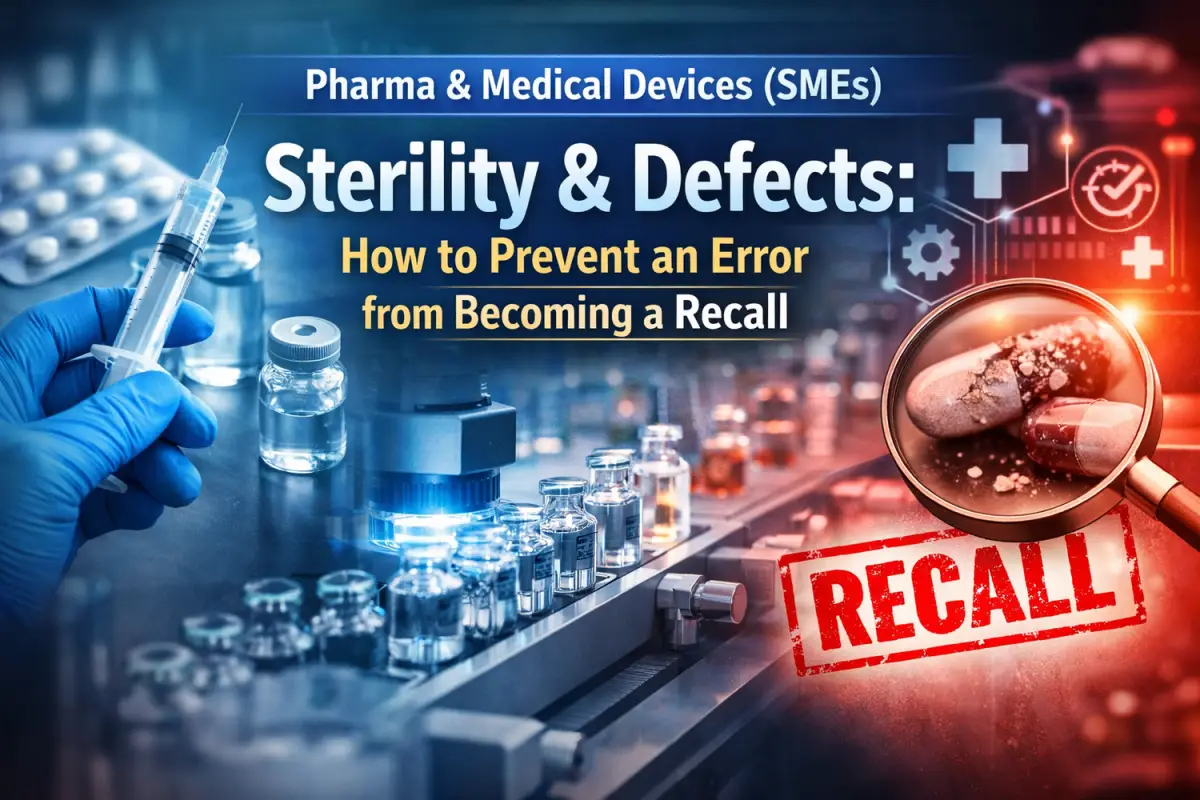
In the pharma and medical devices sector, the word “recall” is not just an operational issue. It represents a massive financial cost, reputational damage, and — in the worst cases — a risk to patient safety.
For a manufacturing SME, a recall can mean:
-
blocked batches
-
production stoppages
-
extraordinary audits
-
loss of customer trust
-
exclusion from future supply contracts
The real question is not: “How do we manage a recall?” But rather: “How do we prevent a small defect from becoming a major problem?”
The Critical Point: Small Defects, Huge Impact
In sterile environments and medical production lines, the most dangerous defects are often the least visible:
-
visible micro-particles in liquids
-
defects in blister or pouch seals
-
microbubbles in syringes or vials
-
out-of-spec filling levels
-
imperfections in caps or closures
-
incorrect or unreadable labels
Many of these defects can escape manual inspection, especially on high-speed lines.
And when they reach the customer or are identified during an audit, the damage has already been done.
Why Sampling Is No Longer Enough
Many SMEs still rely on sampling-based inspection.
The problem?
Intermittent defects do not occur consistently.
They may appear:
-
every 200 units
-
during a specific shift
-
under certain environmental conditions
With sampling, the risk remains.
And in pharma, risk is not an option.
The Real Cost of a Recall
A recall is not just about replacing a product. It involves:
-
reverse logistics
-
root cause analysis
-
internal and external audits
-
rework or batch destruction
-
potential penalties
-
loss of customers
For an SME, a single incident can compromise months — or even years — of commercial effort.
The Solution: 100% Inspection with AI Vision
AI-based computer vision systems make it possible to move from sampling inspection to full in-line inspection. This means:
-
analyzing every single unit
-
detecting micro-defects invisible to the human eye
-
measuring filling levels and integrity
-
verifying labeling and traceability
-
generating structured data for GMP audits
The system does not simply flag rejects.
It creates a digital archive of evidence.
And this completely changes how risk is managed.
Less Human Intervention, Less Risk
In sterile environments, every human intervention represents a potential contamination point. Automation with AI:
-
reduces direct contact
-
maintains consistent standards
-
eliminates subjectivity
-
operates 24/7 with the same level of precision
This does not replace the operator.
It protects them.
SMEs: Is It Really Sustainable?
One of the most common concerns is:
“Is this only a solution for large companies?”
Not anymore.
Today’s industrial vision technologies are:
-
modular
-
scalable
-
integrable into existing lines (retrofit)
-
often delivering payback within 12–24 months
The real cost is not implementing AI. It is failing to prevent the defect.
From Defect Detection to Prevention
By analyzing collected data, it becomes possible to:
-
identify recurring patterns
-
link defects to process parameters
-
intervene before non-conformities occur
-
continuously improve quality
This shifts quality control from reactive to predictive.
Conclusion
In the pharma and medical sector, an undetected defect is not just scrap.
It can become a recall, a financial loss, and reputational damage.
For an SME, protecting quality means protecting the business.
Moving to 100% automated inspection with AI means:
-
reducing risk
-
protecting the customer
-
strengthening compliance
-
stabilizing margins
The real question is:
👉 Is your production line truly capable of detecting every defect before it turns into a recall?
Want to know more? Contact us at info@metalya.it