
Optical Inspection of Glazes and Ceramic Surfaces
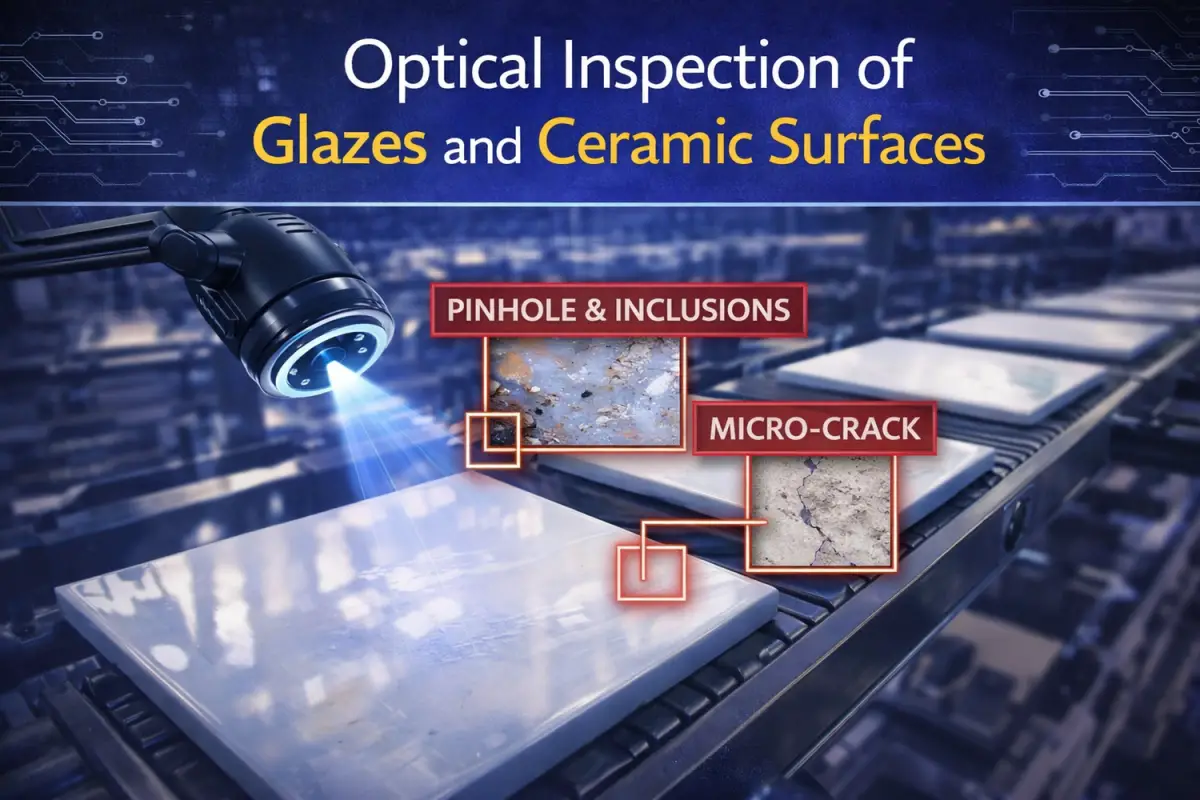
In the ceramics industry, the quality of glazes and surface finishes is a key differentiator, both from an aesthetic and functional perspective. Even minor imperfections can compromise the perceived value of the product and lead to significant scrap.
Traditionally, quality control of ceramic surfaces has relied on manual visual inspection. However, with increasing production volumes and rising market expectations, this approach is no longer sufficient.
Today, thanks to Computer Vision, it is possible to automate the optical inspection of ceramic surfaces, ensuring more accurate, faster, and more reliable quality control.
The Importance of Ceramic Surface Inspection
Ceramic surfaces—especially in tiles and sanitary ware—must meet high standards in terms of:
-
aesthetic uniformity
-
glaze quality
-
absence of visual defects
-
color consistency
A surface defect can result in:
-
production scrap
-
customer complaints
-
reduced product value
-
damage to brand reputation
For this reason, inspection is a critical phase in the production process.
Common Defects in Glazing
During the glazing and firing process, several defects may occur.
The most common include:
-
pinholes and inclusions
-
bubbles or craters
-
glaze drips or runs
-
color non-uniformity
-
micro-cracks
-
surface finish imperfections
These defects can be difficult to detect, especially on glossy or textured surfaces.
Limitations of Manual Inspection
Traditional visual inspection has several limitations:
-
subjectivity of the operator
-
visual fatigue
-
difficulty maintaining consistent standards
-
inability to inspect 100% of production
In high-speed production lines, these limitations become even more critical.
How Optical Inspection with Computer Vision Works
Computer Vision systems use industrial cameras, controlled lighting, and advanced algorithms to analyze ceramic surfaces in real time.
Image Acquisition
Cameras capture high-resolution images of products along the production line.
Lighting is designed to highlight:
-
surface reflections
-
textures
-
color variations
-
geometric defects
Surface Analysis
Algorithms analyze the images to detect anomalies.
The system can identify:
-
point defects
-
linear defects
-
color variations
-
texture irregularities
With the use of AI and Deep Learning, even complex and previously unseen defects can be recognized.
Defect Classification
Detected defects are classified based on:
-
type
-
severity
-
location
This enables more effective quality management.
Automatic Action
The system can:
-
reject non-compliant products
-
alert operators
-
record data for further analysis
-
provide feedback to the production process
Benefits of Automated Inspection
Implementing Computer Vision brings several advantages.
✔ 100% Production Inspection
Every piece is inspected without slowing down the line.
✔ Higher Accuracy
Detection of defects invisible to the human eye.
✔ Reduced Scrap
Early identification of anomalies.
✔ Quality Consistency
Elimination of operator variability.
✔ Continuous Improvement
Data analysis enables process optimization.
Applications in the Ceramic Industry
Optical inspection with Computer Vision is used in:
-
tile production
-
ceramic sanitary ware
-
decorative coatings
-
technical surfaces
In all these applications, visual quality is a key factor.
The Future: Intelligent Quality Control
The evolution of Computer Vision, combined with AI and analytics, will lead to:
-
predictive quality control systems
-
correlation between defects and process parameters
-
integration with MES systems
-
automatic production optimization
Ceramic production lines will become increasingly intelligent and autonomous.
Conclusion
Inspection of glazes and ceramic surfaces is a critical step in ensuring product quality, aesthetics, and value.
Computer Vision enables manufacturers to automate this process, delivering precise, continuous, and reliable inspection for every produced item.
In an increasingly competitive market, investing in machine vision systems means improving quality, reducing waste, and strengthening competitive advantage.
Want to know more? Contact us at info@metalya.it